OpenClaw Around FileMaker: Useful Agents Need Real Operations
Why OpenClaw-style agents become valuable around FileMaker when they carry memory, schedules, approvals, tools, and business context.
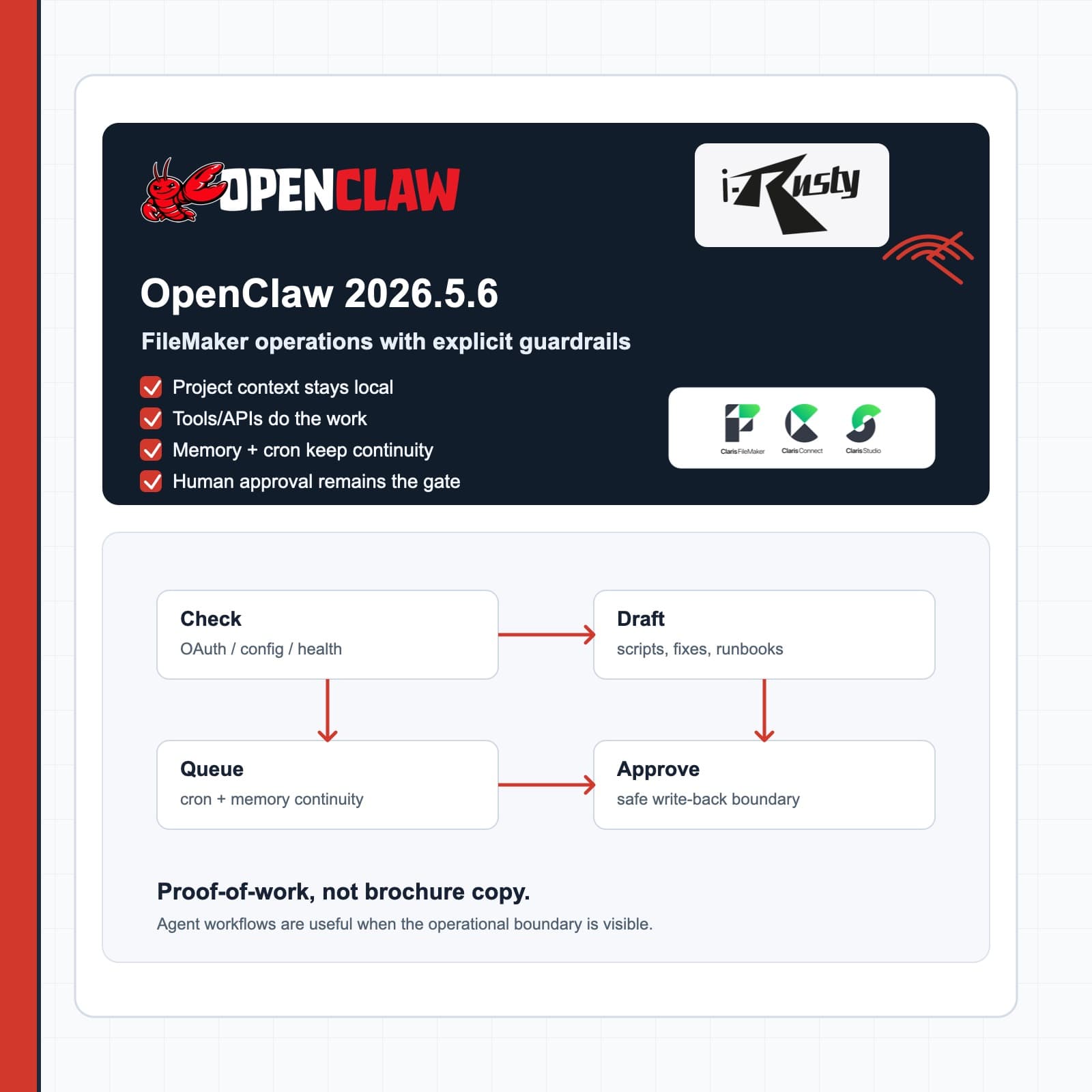
Agents need more than a prompt box
The value of an agent is not that it can write a clever paragraph. The value appears when it has durable context, safe tools, scheduled checks, review points, and a clear understanding of the system it is helping.
That is where OpenClaw-style work fits around FileMaker: memory for decisions, crons for recurring checks, scripts for repeatable actions, and human approval where production data or client communication matters.
FileMaker gives the agent a real business surface
FileMaker systems are not abstract databases. They contain layouts people use, scripts people depend on, reports people trust, and edge cases that decide whether work gets done.
A practical agent should respect those boundaries. It can research, summarize, draft, validate, and prepare work while FileMaker remains the source of truth.
The first goal is operational lift
The early wins are specific: intake cleanup, stale follow-up detection, exception briefs, reporting summaries, data-quality checks, integration monitoring, and implementation notes that do not disappear between sessions.
That is less glamorous than claiming an AI employee will run the company. It is also the version that can safely help a real business this week.
iRusty builds this kind of practical agentic FileMaker workflow: grounded in the system, visible to humans, and aimed at real daily work.
Talk to iRusty